
A dietary supplement purchased online, presented in an attractive format and praised in thousands of positive reviews, offers no guarantee of authenticity or compatibility with an ongoing treatment. Choosing the right dietary supplements means relying on verifiable criteria, not marketing promises or viral trends.
Drug interactions and dietary supplements: the blind spot for buyers
Taking a dietary supplement alongside a medication can potentially alter the active ingredient’s pharmacokinetics. St. John’s wort, for example, induces cytochrome P450 enzymes, reducing the effectiveness of many treatments (oral contraceptives, anticoagulants, immunosuppressants). Licorice can interfere with antihypertensive medications. Even at nutritional doses, vitamin K can destabilize treatment with vitamin K antagonists (VKAs).
A product labeled “natural” does not mean it is free from interactions. Anses explicitly recommends seeking advice from a healthcare professional before taking supplements while on medication. Prolonged, repeated or multiple supplement use increases the risk of adverse effects.
The habit to adopt: tell your doctor or pharmacist about every supplement you are considering, including herbal formulas. In addition, specialist laboratories such as those listed on calcea.fr document their product ingredients transparently, making it easier to cross-check them with a healthcare professional.
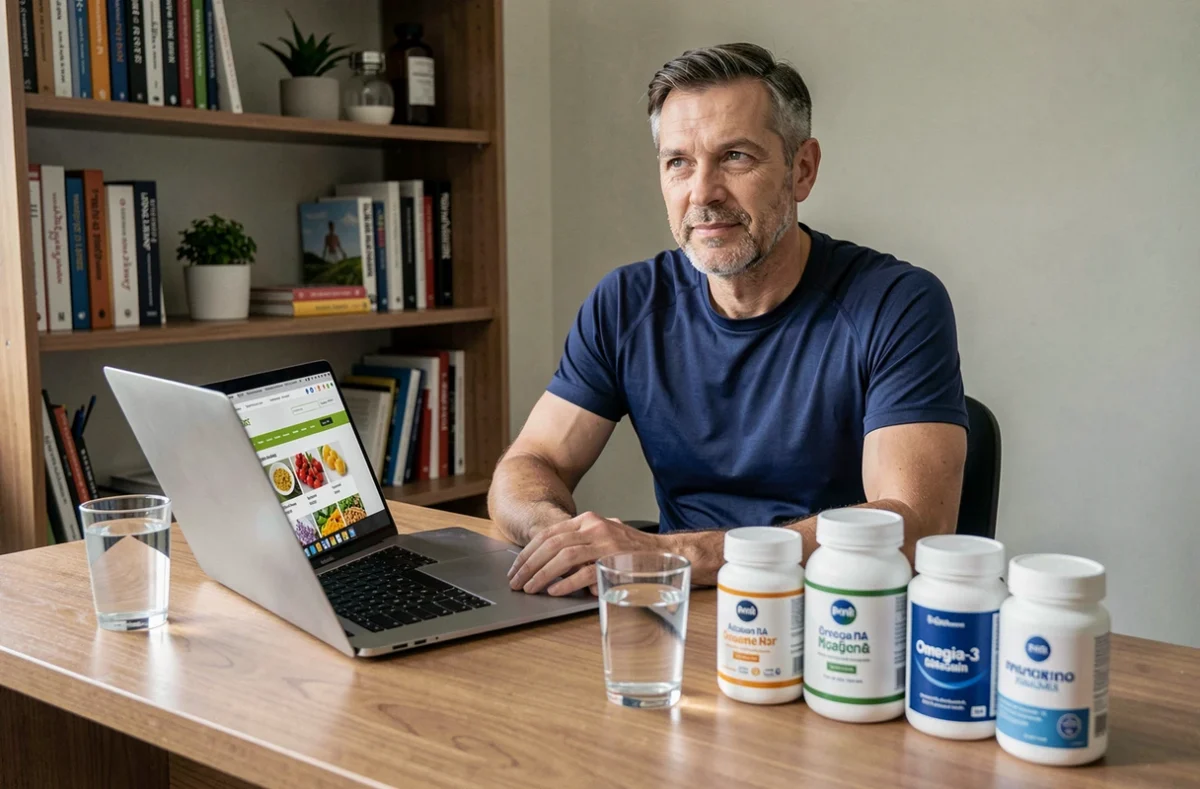
Buying dietary supplements online: check before you order
Where you buy a product is a selection criterion in its own right. On general marketplaces, product traceability is often unclear. A supplement sold from a non-EU country may fall outside European regulations, making checks on its ingredients and dosage unreliable.
The risk of adulterated products being sold online is well documented: undeclared substances, excessive doses and contamination. To reduce this risk, check these three things before placing an order:
- The packaging shows the batch number and manufacturing date, and the manufacturer can be identified (legal name, address and country of production).
- The seller’s website states where the product is made, whether it complies with European regulations, and any relevant certifications (GMP, ISO or quality labels).
- The label lists all active ingredients, excipients, the dosage per serving and any precautions for use, as required by regulations.
A seller that does not provide this information on its product page does not deserve your trust, no matter how many positive reviews it displays.
Dosage and forms of active ingredients: what the label doesn’t always tell you
Two supplements listing the same ingredient at the same dose do not necessarily have the same effect. The chemical form of the active ingredient determines its bioavailability. Magnesium bisglycinate is better absorbed than magnesium oxide, yet many packages list both simply as “magnesium.”
The same applies to vitamin D: cholecalciferol (D3) is more biologically effective than ergocalciferol (D2). For iron, ferrous sulfate causes more digestive issues than iron bisglycinate at an equivalent elemental dose.
Look beyond the marketing when reading the ingredients
Regulated labeling distinguishes between the amount of an ingredient per daily dose and the percentage of the nutrient reference values (NRVs). A supplement that lists a high total magnesium dose but uses magnesium oxide actually provides only a small bioavailable fraction. What matters is the amount your body actually absorbs, not the amount printed on the package.
Excipients also deserve scrutiny. Plant-based capsules (HPMC) are better suited to people with sensitivities than bovine or porcine gelatin capsules, and the list of additives should be checked before buying.

Dietary supplements and lifestyle: tailor supplementation to your actual needs
Social media popularizes supplements in appealing formats (gummies, shots and flavored powders) with targeted promises: better sleep, relaxation and glowing skin. A product’s appealing format does not prove it is useful. A collagen gummy containing a fraction of the amount studied in clinical trials is closer to candy than a meaningful supplement.
Tailoring supplements to your lifestyle requires an assessment first. A sedentary person and someone who does endurance sports do not have the same mineral needs. A vegan diet can increase the risk of deficiencies in vitamin B12, heme iron, zinc and long-chain omega-3s (particularly DHA), which supplementation can address if the right forms are chosen.
When a blood test makes all the difference
Blood tests for 25-hydroxyvitamin D, ferritin or erythrocyte magnesium provide an objective starting point. Without this information, supplementation is guesswork. We find that most poor choices stem from self-prescribing based on vague symptoms (fatigue, stress, brittle hair) without first investigating them through blood tests.
A well-chosen dietary supplement addresses an identified need, uses an active ingredient form with documented bioavailability, comes from a traceable supply chain and does not interact with any medication you may be taking. Everything else—from the packaging to the star rating on a marketplace—is just noise.