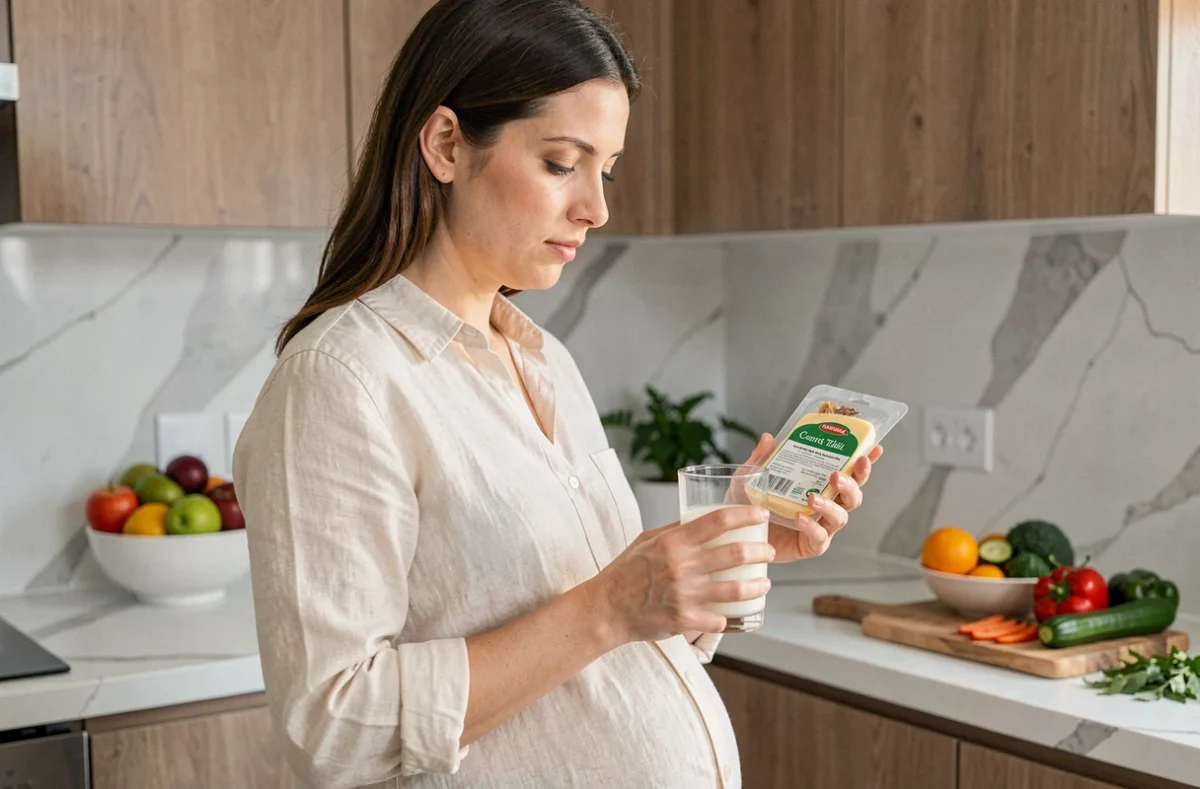
In France, health recommendations for pregnant women place raw milk and its derivatives among the foods to avoid. This precaution is based on a documented microbiological risk: unpasteurized milk can harbor pathogenic bacteria capable of crossing the placental barrier. Listeriosis, the most feared infection in this context, draws attention, but it is not the only danger associated with the consumption of raw milk during pregnancy.
Raw Milk and Pathogens: Beyond Just Listeria
Most articles dedicated to raw milk and pregnancy focus on Listeria monocytogenes. This bacterium alone justifies caution, as the infection it causes can lead to premature birth or severe neonatal infection.
Raw milk also exposes individuals to other pathogens. A RappelConso notice published in September 2026, concerning a raw cow’s milk cheese (Petit Bethmale), mentioned the presence of Shiga toxin-producing E. coli (STEC). These strains can cause severe digestive disorders, and in pregnant women, any acute gastrointestinal infection represents an additional stress factor for the fetus.
Reducing the risk of raw milk to just listeriosis underestimates the real bacterial spectrum. Salmonella, Campylobacter, STEC: these agents thrive in milk that has not undergone any thermal treatment. The issue is not the milk itself, but the lack of pasteurization, which serves as the main safety filter. The available information on the health portal of neo-sante.fr details these infection mechanisms and the associated precautions.
Incubation Period of Listeriosis in Pregnancy: Why the Absence of Symptoms is Not Reassuring
A particularity of listeriosis complicates risk management: the incubation period can last up to eight weeks. In other words, a pregnant woman who has consumed a contaminated product may show no symptoms for several weeks before the infection manifests.
This long period necessitates active monitoring. According to the RappelConso notice related to raw milk Munster cheese (Ferme du Pichet, October 2026), it is recommended that pregnant women who have consumed the recalled product consult a doctor if they experience fever, especially if accompanied by headaches or muscle aches.
The initial symptoms often resemble those of a common flu. Fever, muscle pain, and fatigue do not immediately suggest food contamination. It is precisely this apparent triviality that makes listeriosis dangerous: late diagnosis worsens the prognosis for the fetus.
Raw Milk Dairy Product Recalls: Reading the Label is Not Always Enough
The health alerts published on RappelConso highlight a often overlooked point: a recall does not necessarily concern all brands or all batches of the same cheese. Each recall notice specifies the batches, expiration dates, and points of sale involved.
In practice, this means that the same type of cheese (reblochon, munster, raw milk camembert) may be recalled for a specific batch while remaining available on shelves for other unaffected batches. Checking the batch number on the packaging remains the only reliable method to know if a product is subject to a recall.
Useful information can also be very local. Some recalls only concern a limited sales circuit, an artisanal cheese shop, or a regional point of sale. General recommendations (“avoid raw milk”) remain valid, but they do not replace the regular consultation of the RappelConso site when one has already consumed a risky product.
What the Recall Notice Specifically Indicates
- The commercial name of the product, the brand, and the manufacturer, to precisely identify the item concerned
- The batch numbers and expiration dates, which allow for comparison with the label of the purchased product
- The points of sale where the product was distributed, sometimes limited to a specific chain or geographic area
- The actions to take in case of consumption, with specific recommendations for pregnant women
Raw Milk Cheeses Forbidden During Pregnancy: Texture Matters as Much as the Milk
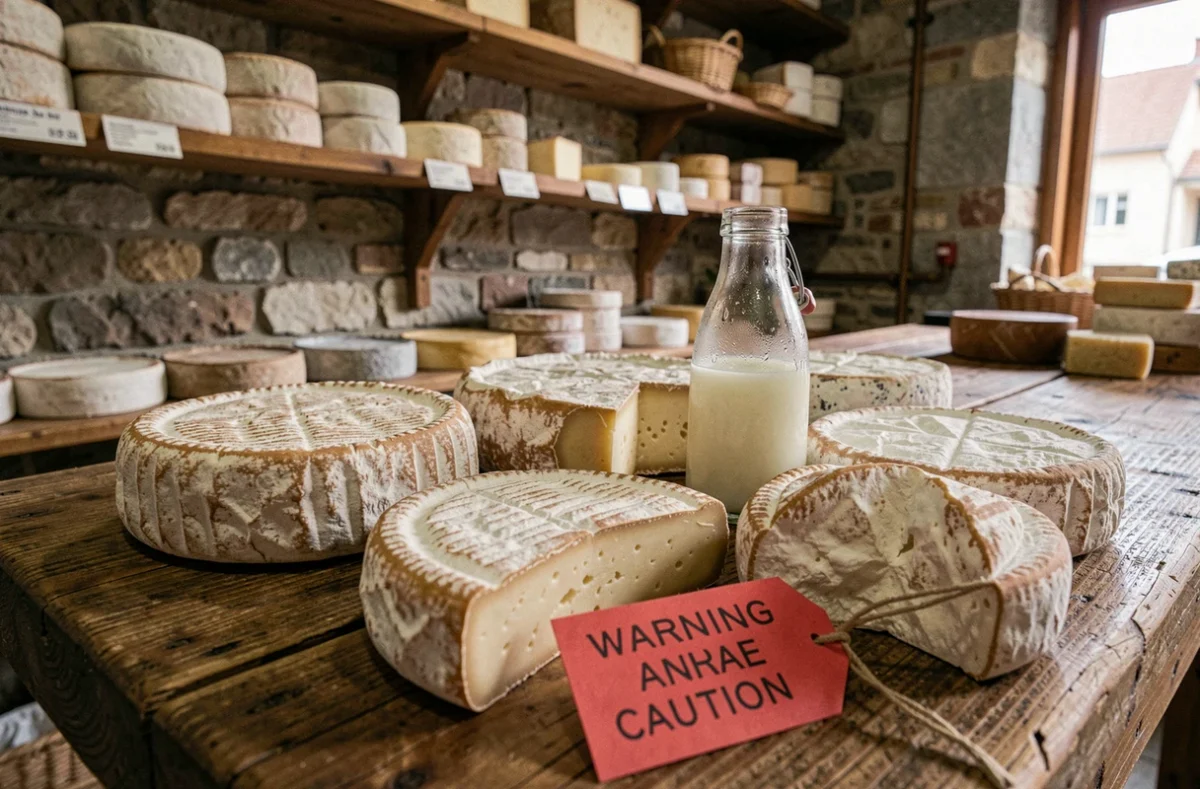
The type of milk (raw, pasteurized, thermized) is only part of the risk assessment. The texture and aging process also play a crucial role. Soft cheeses with bloomy rinds (raw milk camembert, brie) or washed rinds (munster, pont-l’évêque) provide a moist environment conducive to bacterial proliferation.
In contrast, cooked pressed cheeses like comté or gruyère present a very low risk, even when made from raw milk. Their low water content and long aging create an environment hostile to Listeria.
This distinction changes the game for pregnant women who wish to maintain adequate calcium intake without giving up all cheese. The rule is not “raw milk = forbidden,” but rather a combination of criteria:
- Raw milk associated with a soft paste and a rind (bloomy or washed): to be systematically avoided
- Raw milk associated with a cooked pressed paste, aged for several months: the risk is considered very low by health authorities
- Any cheese made from pasteurized milk, regardless of texture: allowed, provided the cold chain and expiration dates are respected
Industrial fresh cheeses (mozzarella, ricotta, mascarpone) made from pasteurized milk do not pose any particular difficulties.
Cooking and Raw Milk: A Thermal Treatment That Changes the Game
A raw milk cheese cooked at high temperature (in a quiche, a tartiflette, a well-cooked pizza) sees its bacterial load significantly reduced. A core cooking temperature above 70 °C destroys Listeria. The condition: that the heat actually reaches the center of the dish, not just the surface.
This precision nuances the often absolute prohibition. Reblochon in a baked tartiflette does not have the same risk profile as reblochon served on a platter. The temperature and cooking time make the difference.
Raw milk during pregnancy does not call for a binary response. Vigilance focuses on the combination of raw milk, soft paste, and consumption without cooking. Outside of this scenario, the risk decreases significantly, though it does not completely disappear for unpasteurized products.