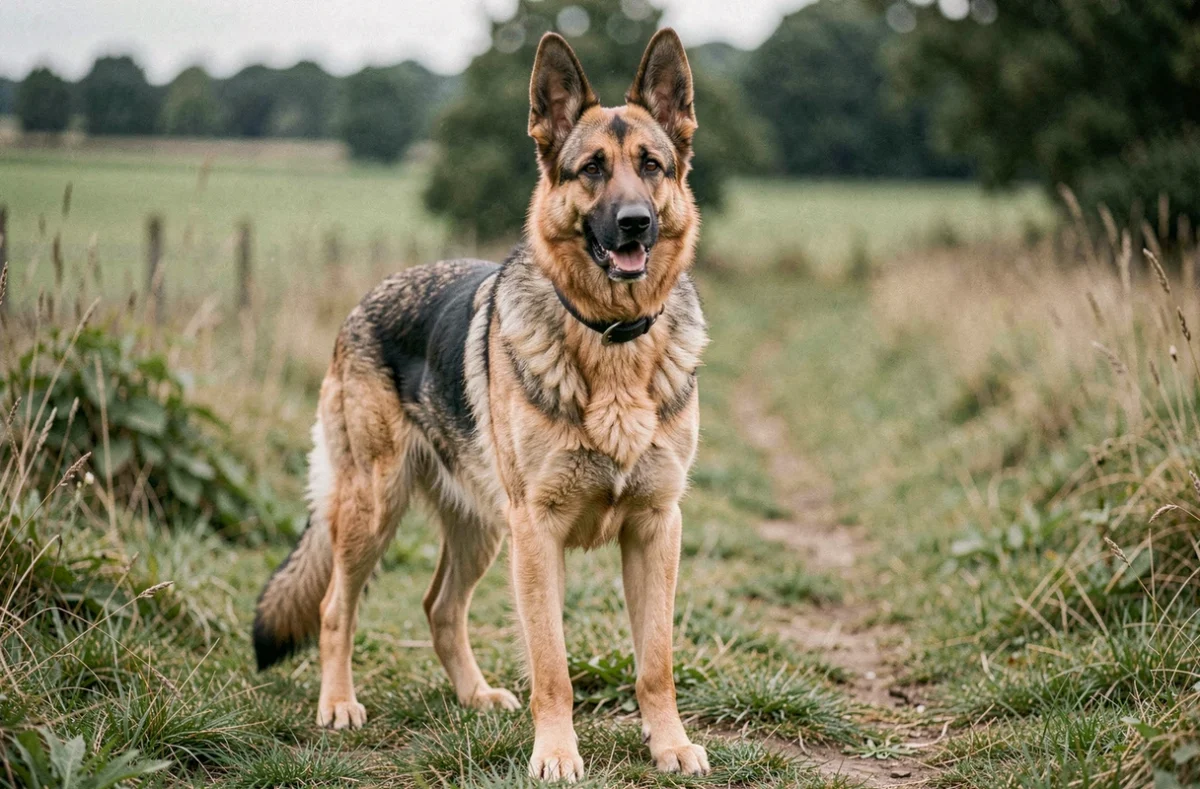
The German Shepherd–Beauceron cross inherits two working lineages with a strong drive to react and move. Understanding what is normal chasing or herding behavior and what may indicate physical discomfort can radically change daily life with this dog.
A study published in 2023 in Animal Genetics identified a variant of the CDH23 gene associated with congenital deafness in the Beauceron, unrelated to coat color. This finding alone shows why this crossbreed’s health deserves particular attention from the moment of adoption.
Chasing excitement or a sign of pain: a guide to reading behavior
A German Shepherd–Beauceron cross that chases a bicycle, nips at ankles or circles a group of children is often displaying a herding drive inherited from its working background. This intense but predictable controlling behavior is characterized by a low posture, a fixed gaze and the ability to disengage when the target stops moving.
The problem arises when the same dog suddenly changes its reactions. A sudden change in behavior may signal pain, not a training issue. A dog that rarely ignored a recall but starts growling when approached, avoids a jump it used to make without hesitation, or reacts when touched in a specific area should be examined by a veterinarian before any training intervention.
Several signs can help distinguish between the two situations:
- Chasing excitement is triggered by a moving stimulus and stops when the stimulus disappears. The dog relaxes again within a few seconds.
- Pain or discomfort causes reactions that are disproportionate to the situation, often accompanied by panting at rest, licking a specific area or stiffness after resting.
- Controlling behavior that intensifies for no apparent reason, especially after exercise, points to a joint or muscle problem rather than a lack of boundaries.
When in doubt, we recommend consulting a veterinarian first, followed by a canine behavior professional if the clinical examination reveals nothing. Correcting a dog that is in pain will make matters worse.
Learning more about the Beauceron and German Shepherd cross can help you anticipate these traits even before adoption.
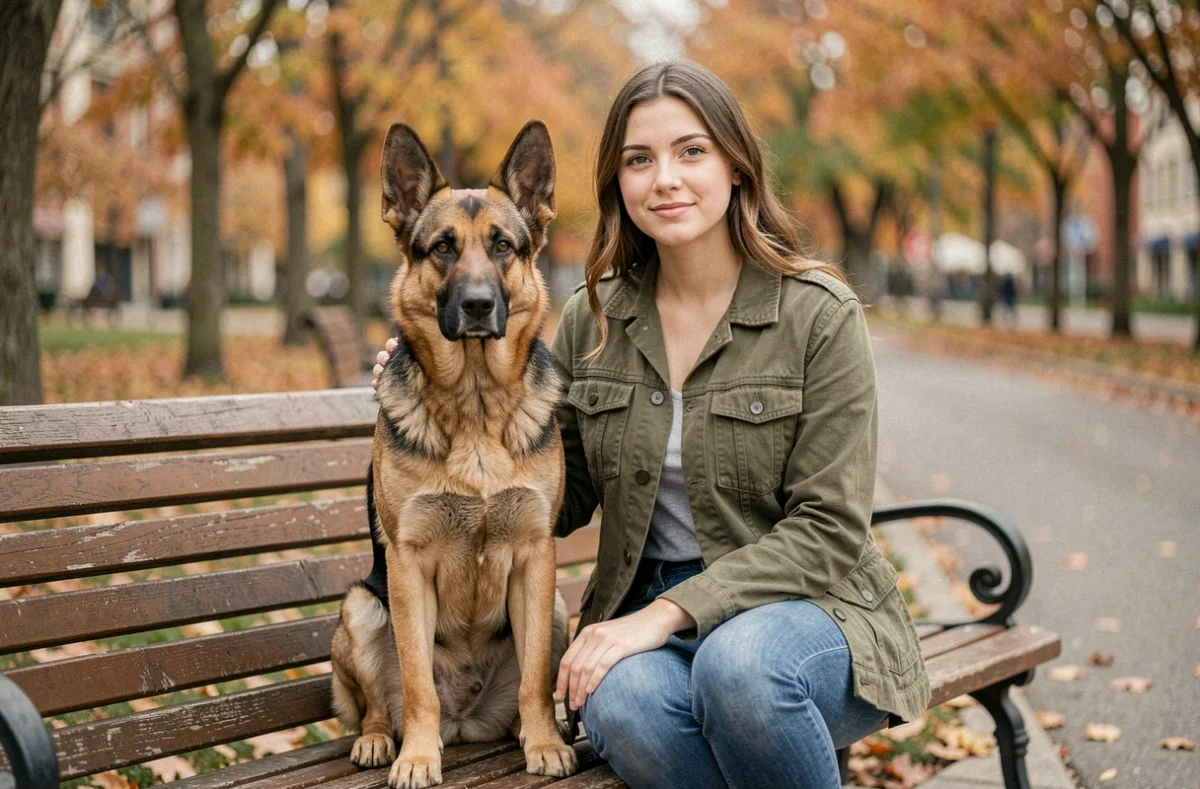
Joint and hearing screening for the German Shepherd–Beauceron cross
Both parent breeds are predisposed to hip dysplasia. Veterinary sources on German Shepherds and Beaucerons emphasize one point: a dog that seems fine is not proof that its joints are healthy. Ask the breeder for the hip screening results (and elbow results, when available) for both parents before adoption.
Given the congenital deafness identified in Beaucerons through the CDH23 variant, it is reasonable to ask the breeder about hearing testing for the puppy (brainstem auditory evoked response testing). This condition is present from an early age and can easily go unnoticed when only one ear is affected.
Growth in large-breed puppies
Joint health prevention starts during growth. For a crossbreed of this size, published guidance is consistent: feed a diet formulated for large-breed puppies and increase exercise gradually. Long runs, repeated jumping on hard surfaces and calcium supplements not prescribed by a veterinarian should all be discussed with a vet.
Trying to tire out a puppy so it will be calm at home is counterproductive. Too much activity on developing joints can cause silent damage that only becomes apparent much later.
Socializing the crossbreed: teach calm, not just exposure
A common response to a reactive puppy is to increase outings, meet-ups and stimulation. With a German Shepherd–Beauceron cross, this strategy often has the opposite effect: an overstimulated dog that no longer knows how to settle.
Effective socialization involves gradual, positive experiences, at a distance that allows the dog to remain comfortable. Gradually increasing distractions is better than forced immersion. A puppy that watches a market from twenty meters away without becoming tense learns more than one dragged into the middle of the crowd.
The other side of the equation, which is rarely discussed, is explicitly teaching the dog to rest. A crossbreed from two working breeds will not regulate its activity level on its own. Teaching it to lie on a mat while household life carries on, and rewarding calm rather than reacting only to excitement, gives structure to its daily routine just as much as tracking or obedience sessions do.
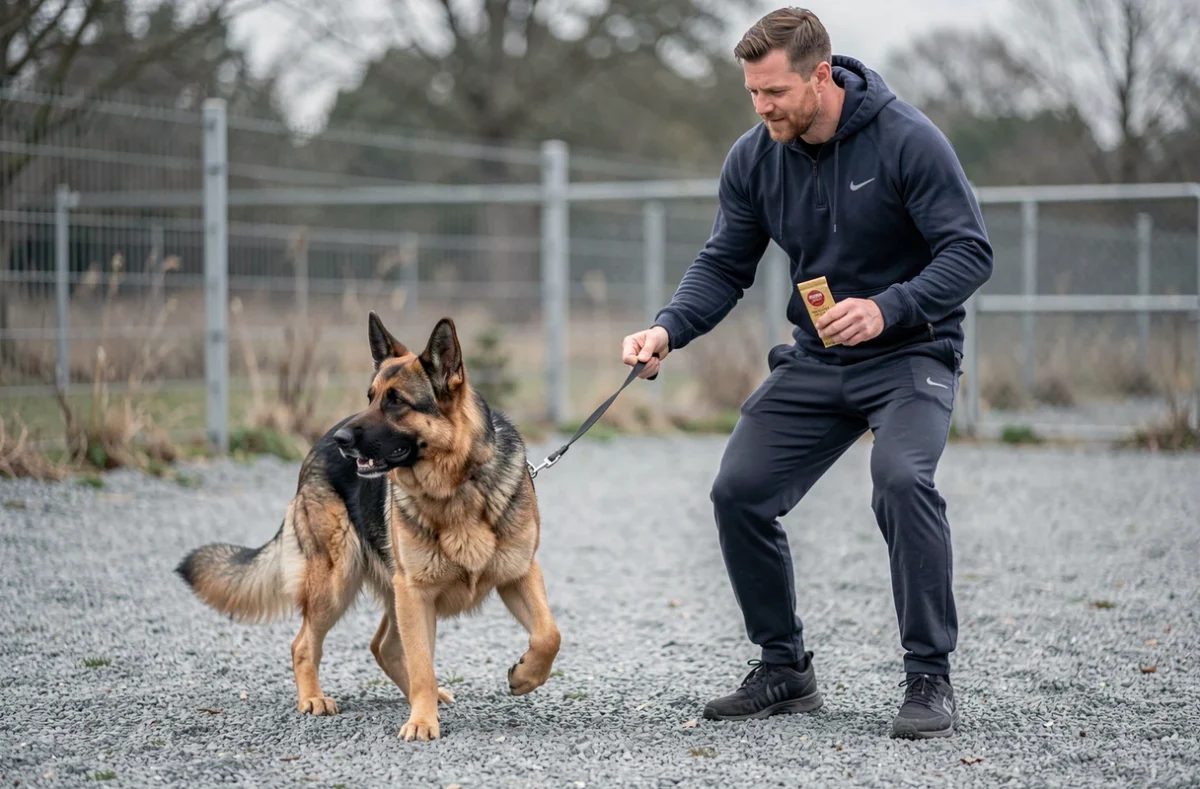
German Shepherd–Beauceron cross temperament: what the two lineages bring
The German Shepherd brings sensitivity to its handler, an ability to read human intentions and pronounced emotional reactivity. The Beauceron adds independent decision-making, physical hardiness and a lower frustration threshold than you might expect in a dog of this size.
The resulting crossbreed is neither the sum nor the average of the two. Each individual inherits an unpredictable mix of these traits, making generalizations unreliable. One puppy in a litter may be clingy and anxious, while its sibling is aloof and independent.
This variable temperament calls for adaptable training. Rigid protocols work poorly with a dog whose main motivation can shift from play to territorial guarding over just a few months of maturation. Observe, adjust and take a step back when a method is not working: that is the realistic day-to-day approach with this crossbreed.
A German Shepherd–Beauceron cross that receives proper health care, is socialized without being overwhelmed and has its chasing behavior channeled into suitable activities (tracking, practical search work, structured obedience) can be a reliable, enduring companion. The key is accepting that this dog requires careful observation, not just firmness.