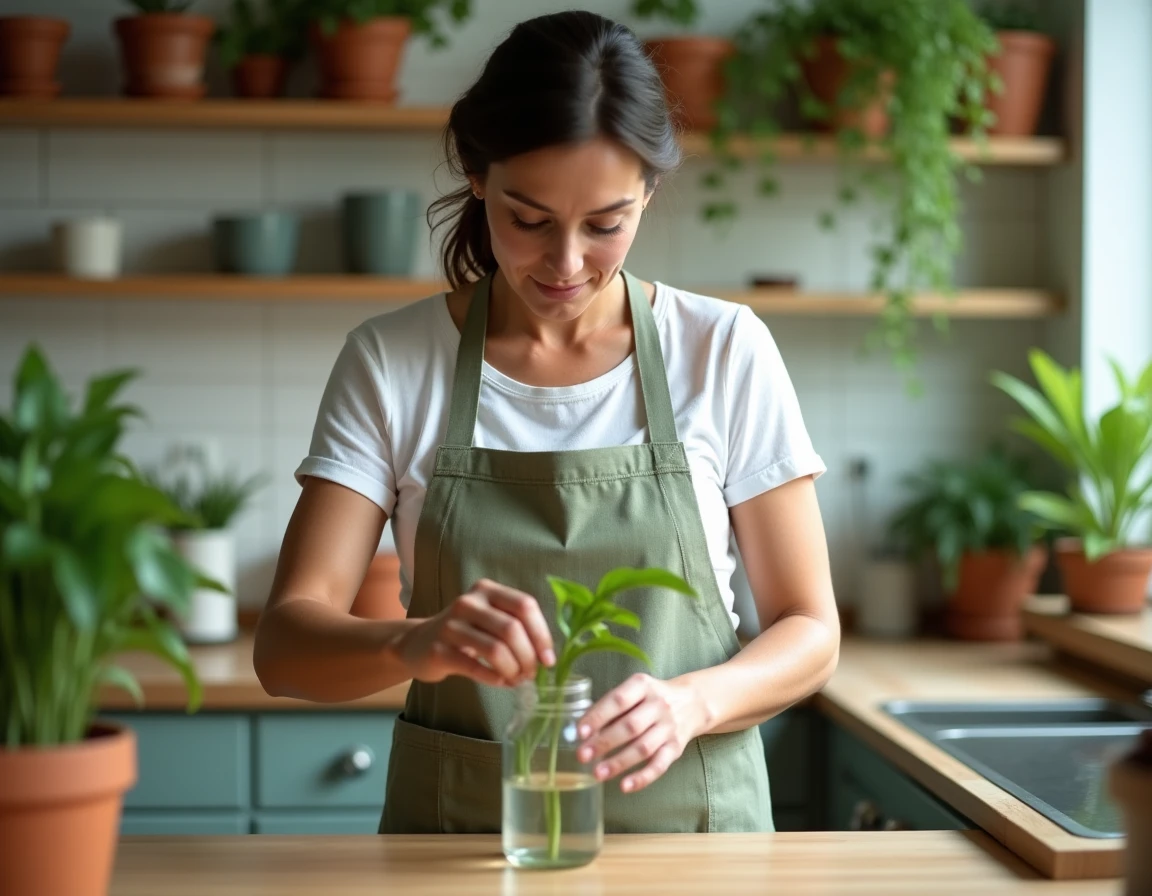
Cutting is not just about dipping a stem in a glass of water. Success depends on specific physiological parameters, starting with the polarity of the taken fragment and the leaf/node ratio retained. Multiplying your plants through cuttings remains the most accessible method to obtain a genetic clone of the mother plant, provided you master a few variables that general guides tend to overlook.
Polarity and auxins: what really triggers the rooting of a cutting
A cutting inserted upside down into the substrate will not root. The polarity of the plant fragment conditions the migration of auxins to the base of the stem, where they stimulate the formation of the callus and then adventitious roots. Respecting the direction of growth is a non-negotiable condition.
On herbaceous stems (pothos, tradescantia, philodendron), the cut should be made just below a node. It is at this precise point that the concentration of meristematic cells is the highest. Cutting between two nodes significantly reduces the chances of rooting because the internodal tissue produces far fewer adventitious roots.
We recommend removing most of the lower leaves to limit evapotranspiration while retaining at least one or two upper leaves. Without leaf surface, photosynthesis stops and the cutting no longer has the energy necessary to generate new root cells. The right ratio: one to two nodes buried in the substrate, one to three leaves above.
To learn how to easily multiply cuttings, the technique of taking the cutting is as important as the care provided afterwards. A poorly sharpened blade crushes the vascular tissues and blocks sap circulation from the start.
Cutting in water, substrate, or LECA: which rooting medium to choose
The choice of medium alters the type of roots produced, and thus the transition to the final pot. This is a point that most tutorials neglect.
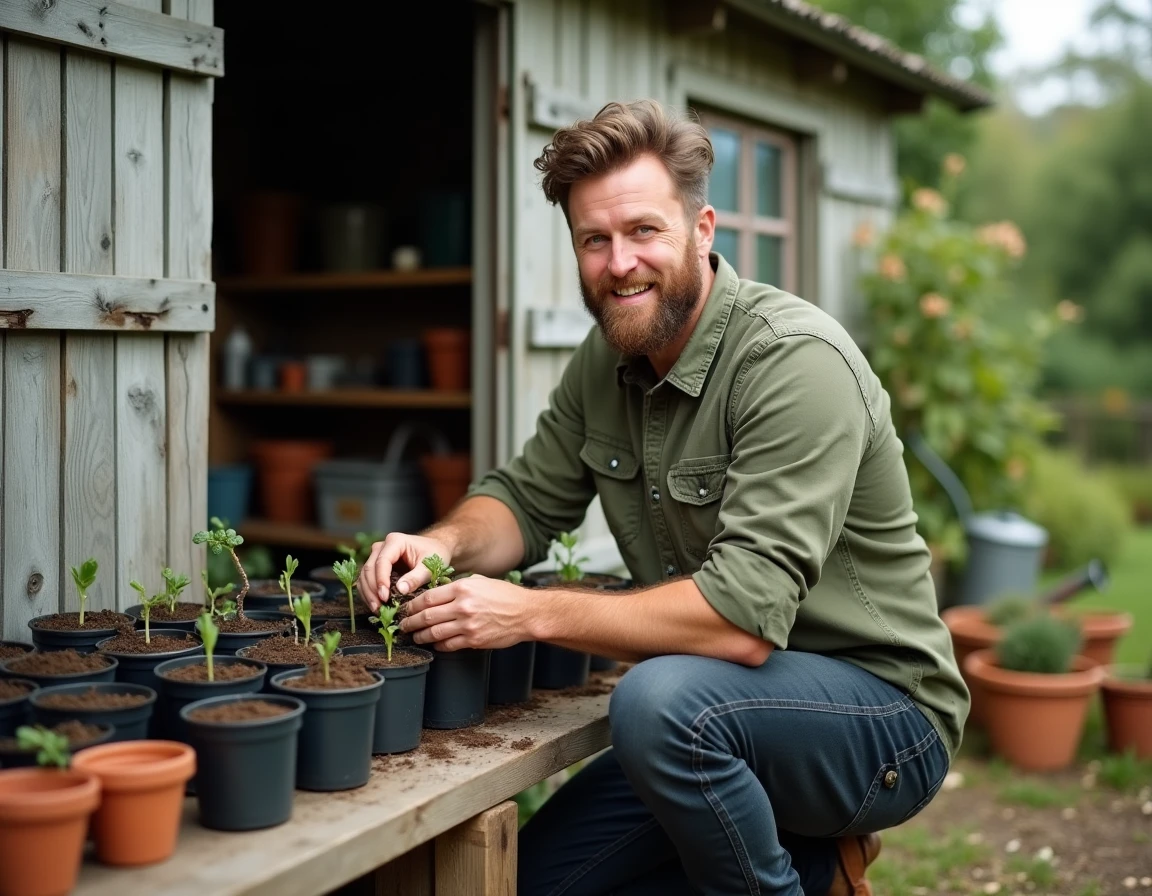
Roots formed in water are more fragile and less branched than those developed in substrate. During repotting, some of these aquatic roots die and must be replaced by soil-adapted roots, which causes a transition stress that can be fatal for sensitive species.
In recent years, indoor plant collector communities have documented a strong adoption of expanded clay pellets (LECA) for propagating aroids (monstera, philodendron, syngonium). The semi-hydroponic system limits rot compared to stagnant water and produces sturdier roots, facilitating the transition to final cultivation in inert substrate and liquid fertilizer.
The classic substrate (peat-perlite mix or coco fiber-perlite) remains the most reliable medium for woody and semi-woody garden cuttings: roses, lavender, hydrangeas. It offers a good compromise between moisture retention and drainage.
- Water: suitable for easy herbaceous stems (pothos, ivy, mint), but requires a change every three to four days to avoid anoxia and bacterial growth.
- LECA / semi-hydro: effective for tropical aroids, reduces rot, requires regular input of diluted nutrient solution.
- Peat-perlite substrate: the reference for garden cuttings (roses, shrubs), maintains constant moisture without saturation if the mix is well balanced.
Cutting hormones: synthetic IBA versus natural alternatives
Indole-butyric acid (IBA) remains the reference in horticultural production. Academic trials, notably those reported by the Ohio State University Extension and the University of Florida IFAS Extension, confirm that IBA yields the most consistent and predictable results across all species.
Homemade alternatives (aloe vera gel, willow bark infusion, raw honey, cinnamon) are increasingly being tested by amateur horticulturists. On popular houseplants like pothos, monstera, or philodendron, some of these preparations achieve rooting rates close to IBA, but with slower rooting and more variable results depending on the species.
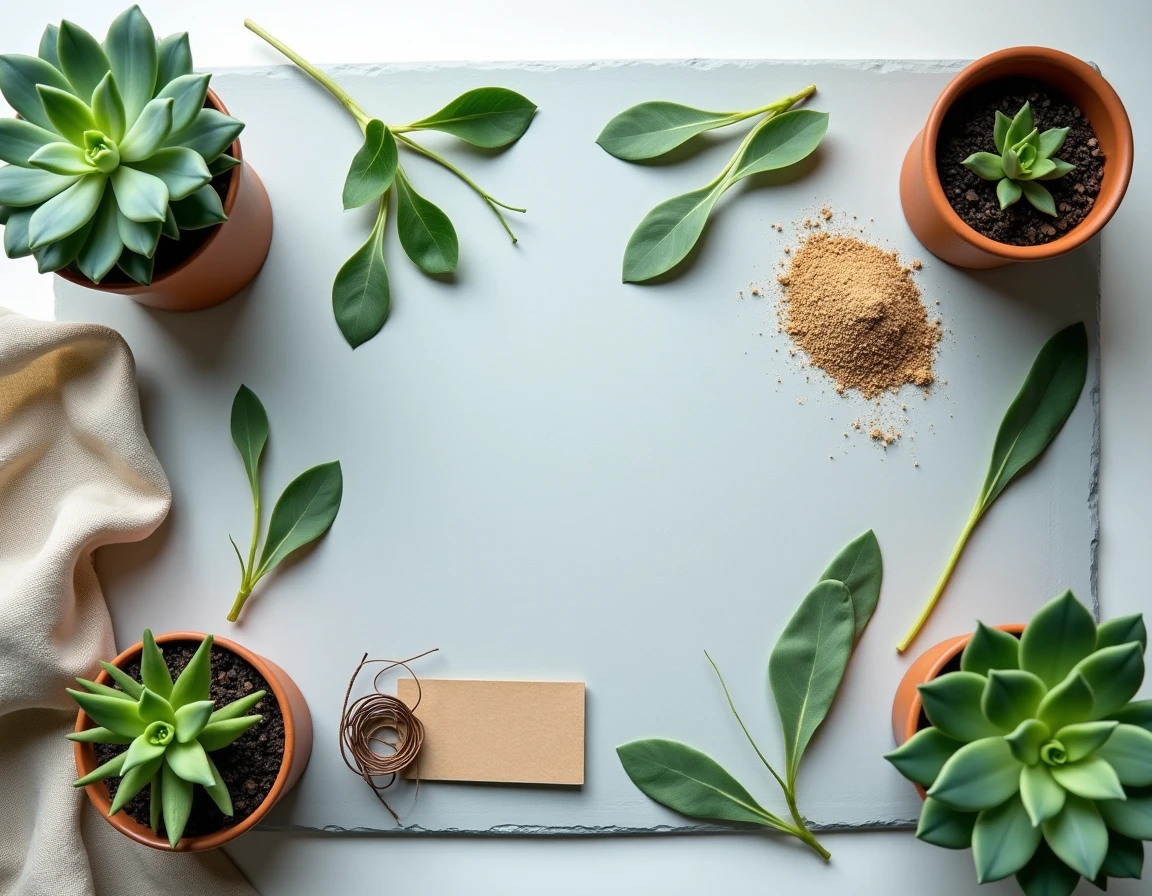
Cinnamon has particular interest: it acts primarily as a fungicide on the cut wound, not as a hormone. It protects the callus from rot in humid environments, which indirectly improves the survival rate. Combining cinnamon on the cut and powdered IBA on the nodal area yields very good results on semi-woody cuttings.
For gardeners wishing to avoid synthetic products, willow water (soaking young willow twigs in water for a few days) naturally contains auxin precursors. However, we observe that this method works better on species that are already easy to propagate and offers little benefit on recalcitrant species.
Humidity and temperature: the two parameters that make the difference
A cutting without roots cannot absorb water from below. All its hydration comes from reducing leaf loss and ambient humidity. This is why the so-called “closed” technique (cutting under a bell jar, transparent plastic bag, or mini-greenhouse) significantly improves survival.
Maintaining high humidity around the foliage reduces evapotranspiration and allows the cutting time to form its first roots without drying out. Brief daily ventilation prevents mold development.
- Ideal substrate temperature: slightly higher than ambient temperature. A heating mat set a few degrees above the room temperature accelerates cell division at the nodes.
- Light: bright but indirect. Direct sunlight on a cutting under a bell jar creates a greenhouse effect that literally cooks the tissues.
- Ventilation: a daily opening for a few minutes is enough to renew the air and limit fungal pathogens.
The duration of rooting varies greatly depending on the species. Tropical herbaceous stems often produce visible roots within one to three weeks. Woody cuttings of roses or lavender may require several months before showing sufficient root growth for transplanting.
The most reliable test to check rooting remains resistance to a slight pull. If the cutting resists when gently tugged, the roots are sufficiently established to consider gradual repotting, first moving to an individual pot before transferring to the ground or the final pot.